

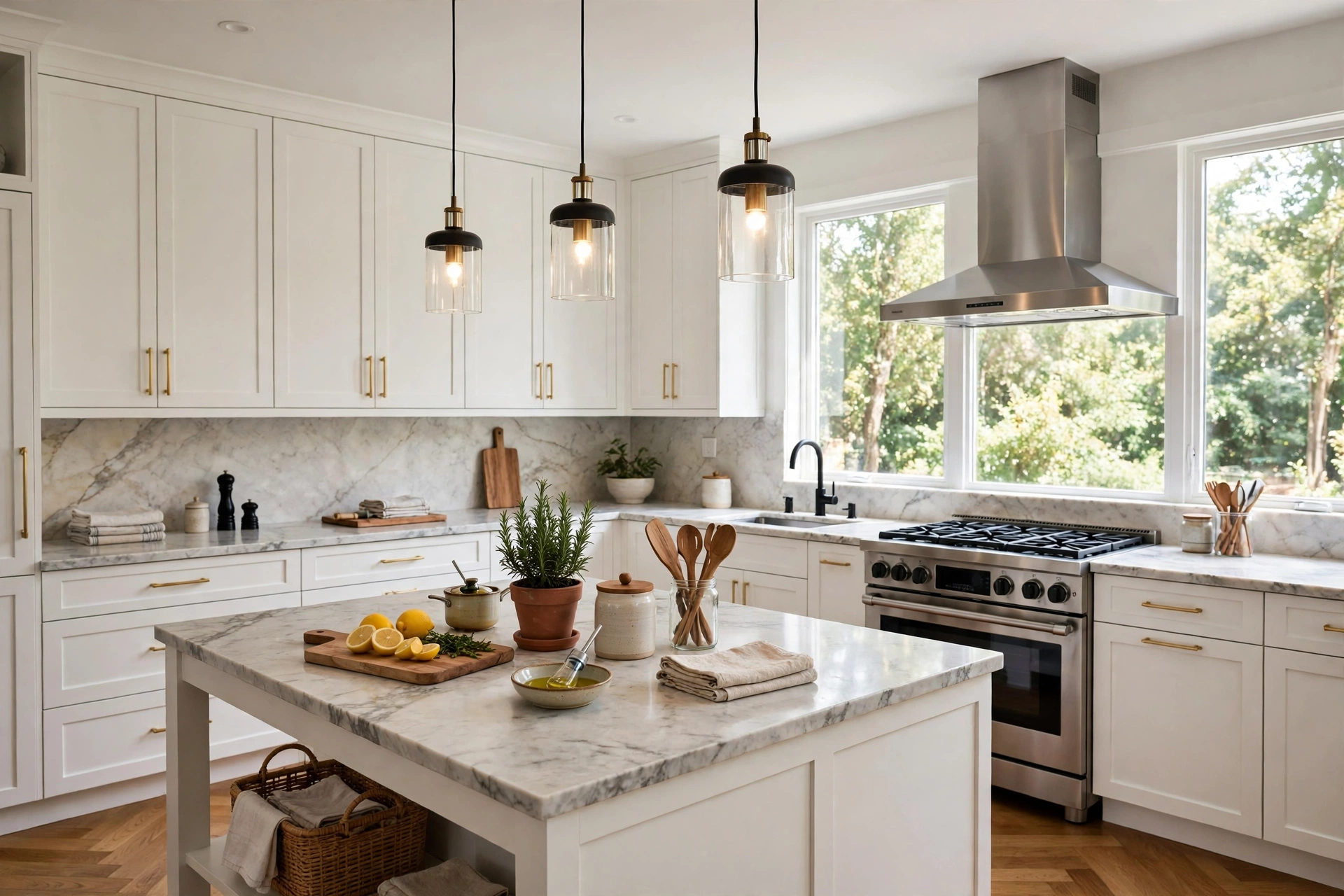
The kitchen is the hardest-working room in most homes, and it is also the room where style is most visible. A stylish kitchen makeover succeeds when elegance and practicality reinforce each other: a layout that shortens every task, surfaces that are easy to clean, storage that keeps worktops clear, and finishes that make the room feel calm and considered. When those pieces come together, cooking stops feeling like a chore and the kitchen becomes a place people genuinely want to spend time in.
The short answer is this: plan the layout around the sink, hob and fridge first, then choose durable worktops, a timeless cabinet style and layered lighting, and finish with storage that hides the clutter. You do not need a full gut renovation to achieve an elegant, practical kitchen. Refacing or repainting cabinets, replacing the worktop and splashback, upgrading the tap and lighting, and adding pull-out storage can transform the room for a fraction of the cost of starting over.
What Makes a Kitchen Makeover Both Stylish and Practical
A kitchen that looks beautiful in a photograph but frustrates the cook has failed. Equally, a kitchen that is purely functional but joyless is a missed opportunity, because you will spend more waking hours there than in almost any other room. The balance comes from testing every stylish choice against a practical question: will this still look good and work well after a year of daily cooking?
Elegance in a kitchen usually comes from restraint. A calm palette, one or two strong materials, clean lines and uncluttered worktops read as far more elegant than a room crowded with competing features. Practicality comes from the invisible decisions: deep drawers that open fully, a bin within easy reach of the prep area, a worktop at a comfortable height, and lighting that falls on the worktop rather than on your back.
Rethinking Your Kitchen Layout Before You Buy Anything
The main layout shapes each suit different rooms. A galley kitchen, with two parallel runs, is extremely efficient for cooking in a narrow space. An L-shaped kitchen opens naturally into a living or dining area and suits an island or table. A U-shaped kitchen wraps the cook in worktop and storage, which is wonderful for serious cooking but can feel enclosed in a small room. An island layout adds prep space and seating, but only if there is enough clearance around it — generally at least three feet of walkway on each side.
Cabinetry Choices That Set the Style of Your New Kitchen
Cabinets cover more visual area than any other element in a kitchen, so their style and colour set the tone for the whole room. Shaker-style cabinets, with their simple framed panels, suit almost any home and can be painted in any colour, from classic white to deep navy or sage green. Flat-panel or slab cabinets give a clean, modern look and are easy to wipe down. Inset cabinets, where the door sits flush inside the frame, look refined and traditional but cost more.
Two-tone cabinetry is a popular way to add depth without committing the whole room to a bold colour. A common approach is a darker shade — navy, forest green or charcoal — on the lower cabinets or the island, with a lighter shade on the uppers. The darker base grounds the room while the lighter uppers keep it feeling bright and open. If you prefer a single colour, warm whites and soft greys are forgiving and timeless.
Countertops and Backsplashes That Earn Their Keep
The splashback is where a kitchen can show personality. Classic white subway tile is timeless and affordable, while handmade-look zellige tiles add texture and variation. A slab splashback in the same stone as the worktop eliminates grout lines entirely and is the easiest surface to clean, though it costs more. Whatever you choose, extend the splashback to the underside of the cabinets and consider taking it up to the ceiling behind the hob for a finished look.
Sinks, Taps and Appliances That Make Cooking Easier
A good tap repays its cost every day. A pull-out spray makes rinsing vegetables and cleaning the sink far easier, and a single-lever mixer gives precise temperature control with one hand. Touchless taps reduce mess and are handy with dirty hands, though they need power and occasional sensor cleaning. Choose a finish that matches your cabinet hardware — matte black, brushed brass or polished chrome — and keep it consistent across the room.
Lighting Layers That Flatter an Elegant Kitchen
A kitchen needs more light, and more kinds of light, than almost any other room. Start with ambient light — recessed ceiling lights or a central fitting — for general brightness. Add task lighting where work happens: LED strips under wall cabinets throw light directly onto the worktop, removing the shadows cast by your own body. Finish with accent lighting: pendants over an island, a picture light, or a strip inside a glass-fronted cabinet.
Pendant lights over an island do double duty as decoration and task light. Hang them low enough to create a pool of light on the work surface — typically around 30 to 36 inches above the worktop — and space them evenly so the light is consistent. Dimmers are essential in a kitchen: bright light for prep and cleaning, softer light for breakfast and evening drinks. Warmer colour temperatures, around 2700K to 3000K, flatter both food and faces.
Storage That Keeps a Practical Kitchen Clutter-Free
A practical kitchen is a kitchen where everything has a place and that place is easy to reach. Pull-out shelves in lower cabinets end the archaeology of reaching into dark corners. A pull-out larder keeps dry goods visible and organised. Deep drawers with dividers hold pots, lids and baking trays in order, while a vertical divider near the oven keeps chopping boards and trays upright and accessible.
Corner cabinets, the traditional dead zone of a kitchen, can be rescued with a lazy Susan or a blind-corner pull-out system. Spice storage works best near the hob, in a narrow pull-out or a drawer with angled inserts. Under-sink organisers, hanging rails for utensils, and a dedicated drawer for the items you use every morning — coffee, tea, breakfast bowls — all shorten the daily routine.
- Keep worktops clear: store small appliances you use weekly, not daily, in a cupboard or an appliance garage.
- Group items by task — baking, breakfast, coffee — rather than by type, so each job has one drawer or shelf.
- Use the inside of cabinet doors for measuring cups, cleaning supplies or a small spice rack.
- Leave one stretch of worktop permanently empty for prep; it will be used every single day.
Colour and Finishes for a Kitchen That Feels Elegant, Not Fussy
An elegant kitchen palette is usually a calm one. Warm whites, soft greys, sage green and natural wood tones create a backdrop that feels fresh without shouting, and they let one feature — a stone worktop, a coloured island, a beautiful tile — take the starring role. If you love colour, use it where it is easiest to change: paint, bar stools, a rug, or the island, rather than the whole room.
Finishes should be chosen as a family, not one by one. Pick a metal finish and repeat it across taps, handles, light fittings and appliance trims. Matte black reads modern and hides fingerprints; brushed brass adds warmth and suits classic kitchens; polished chrome is bright and timeless. Mixing two metals can work if one clearly dominates and the other is used sparingly, but a single consistent finish is the safer path to an elegant result.
Kitchen Makeover Missteps That Cost More Than They Save
The costliest kitchen misstep is ordering before measuring twice. Cabinets that do not fit, a fridge that blocks a door, or a worktop that arrives a centimetre short are all expensive to fix. Measure the room, the doorways the cabinets must pass through, and the appliances themselves, and confirm the measurements with your supplier before anything is ordered.
A second misstep is choosing finishes for their photograph rather than their maintenance. A white marble worktop can stain, a high-gloss cabinet shows every fingerprint, and open shelving above a hob collects grease. Ask how each surface is cleaned and how it ages, and choose the option you will still be happy to clean in a year’s time.
Gas, Water and Wiring: Kitchen Jobs That Belong to Licensed Tradespeople
Kitchens concentrate the three services that demand the most respect: gas, water and electricity. Moving a gas hob, re-routing a water supply, or adding new circuits for an oven or induction hob are jobs for licensed professionals, and in many places the law requires it. A gas leak, a hidden water leak behind a cabinet, or an overloaded circuit are all serious risks that a qualified tradesperson is trained to prevent.
Watch for signs that a job needs a professional: an old fuse box with no spare capacity, plumbing that is corroded or leaking, a gas smell, or any plan that involves moving a load-bearing wall to open up the kitchen. Even replacing a tap can reveal a seized valve or a corroded pipe, and knowing when to stop and call for help is part of good DIY judgement.
Final Thoughts: Your Elegant, Practical Kitchen, One Decision at a Time
A stylish kitchen makeover is not about buying the most expensive things. It is about a layout that flows, cabinets that suit the house, surfaces that clean easily, light that flatters the room, and storage that keeps the worktops clear. Plan the layout first, choose durable materials, keep the palette calm, and bring in licensed professionals for gas, water and electrical work. Decision by decision, the kitchen becomes what it should be: elegant to look at, practical to cook in, and a pleasure to spend time in every day.
Stylish Kitchen Makeover FAQs
How much does a stylish kitchen makeover cost?
It depends on scope and location. As a very broad guide, a cosmetic refresh — painting cabinets, new hardware, a new splashback and lighting — can cost a few thousand dollars, while a full remodel with new cabinets, worktops and appliances can run into the tens of thousands. Always get several written quotes from local suppliers and installers.
Can I make over my kitchen without replacing the cabinets?
Yes. If the cabinet boxes are sound, repainting them, replacing the doors and fitting new handles can transform the room. Adding a new worktop, splashback and lighting alongside a cabinet refresh delivers most of the visual change of a full remodel for much less money and disruption.
What is the best worktop for a busy family kitchen?
Engineered quartz is the most popular choice because it is non-porous, stain-resistant and needs little maintenance. Granite is durable and beautiful but needs periodic sealing. Laminate is the most affordable and has improved greatly in appearance, though it is less heat-resistant than stone.
What colour cabinets are most timeless?
Warm whites, soft greys and natural wood tones age most gracefully. Sage green and deep navy have become modern classics, especially as an accent on an island or lower cabinets. Very bold or very trendy colours can date quickly, so use them where they are easy to change.
How do I make a small kitchen feel more elegant?
Keep the palette light, use handleless or slim-handled cabinets, add under-cabinet lighting, and keep worktops as clear as possible. A single strong feature, such as a beautiful splashback or a stone worktop, will read as more elegant than many competing details in a small space.
Do I need a professional for a kitchen makeover?
For painting, hardware, shelving and cosmetic updates, a confident DIYer can do excellent work. For gas, major electrical work, moving plumbing or structural changes, hire licensed professionals. If you are unsure, a short consultation with a professional is a wise investment.